Water Damage Restoration in Columbus, OH
Hi, I'm Marcus Reed. Water on the floor feels urgent fast — soaked carpet, wet drywall, basement flooding, or a sewage backup can leave you unsure what to do first. I've spent 11 years helping Columbus homeowners, apartment owners, property managers, and businesses get through exactly this situation. My job is to help you understand the next step, start water removal and drying support, and communicate clearly from start to finish.
- Water removal & drying support
- Moisture-focused next steps
- Documentation when needed
Water spreading right now? Don't wait — every minute matters.
Fast water removal helps limit how far the damage goes. Talk to us about your situation today.
- Columbus, OHService Area
- Emergency HelpWater Damage Response
- Water Extraction & DryingExtraction, drying & cleanup
- IICRC CertifiedWater Damage Restoration
Water Damage Is Stressful — Here's How We Help You Take Control
Whether you're standing in a flooded basement at midnight or just spotted a water stain spreading across the ceiling, the worry is real: the damage, the cost, and what to do next. Rapid Waterrepair helps Columbus-area property owners move quickly from panic to a clear plan.
- Standing water and soaked carpet that keeps spreading
- A flooded basement after heavy rain or sump pump failure
- A burst or frozen pipe releasing water into walls and floors
- Sewage backup with contaminated water and odor

Why Fast Water Removal Matters After Water Damage
Water damage rarely stays still. Within hours, water wicks into drywall, subfloors, and belongings, and the longer it sits, the wider the damage spreads. Left untreated, trapped moisture raises the risk of mold growth and structural problems — which is why fast water extraction and structural drying matter so much.
Damage Spreads Fast
Porous materials absorb water quickly. Early extraction and drying help protect floors, walls, and stored items before secondary damage sets in.
Hidden Moisture Lingers
Surfaces can feel dry while moisture stays trapped behind walls and under floors. Professional drying targets the water you can't see.
Mold Risk Climbs
Leftover moisture creates conditions for mold. Thorough drying and dehumidification help reduce that risk, and visible growth can be handled with mold remediation.
If it's safe to do so, take these steps right away after water damage:
- Shut off the main water source to stop more water from coming in.
- Turn off the power at the breaker if water is near outlets, panels, or appliances.
- Move valuables, electronics, and important documents to a dry area.
- Document the damage with clear photos and video for your insurance records.
- Call a water damage restoration company for water extraction, drying, and cleanup guidance.
Water Damage Restoration Services for Columbus Properties
From the first emergency call through drying, cleanup, and restoration planning, here's how Rapid Waterrepair helps homes, apartments, and commercial buildings recover.
Emergency Water Damage Restoration
Rapid response for sudden water emergencies, from extraction to drying and cleanup, so you can act before the damage spreads.
Get emergency restoration →Water Extraction & Removal
Powerful removal of standing water from basements, floors, and rooms — the critical first step in any restoration.
Request water extraction →Flooded Basement Cleanup & Repair
Cleanup, drying, and restoration for flooded basements caused by storms, sump pump failure, or plumbing leaks.
Schedule basement cleanup →Mold Remediation & Removal
Inspection and remediation for mold that can develop after water damage, with a focus on safe, contained cleanup.
Learn about mold remediation →Burst & Frozen Pipe Water Damage Repair
Water extraction and drying after burst or frozen pipes flood walls, floors, and ceilings — common in Columbus winters.
Repair pipe damage →Water Heater Leak & Damage Repair
Cleanup and drying for slow or sudden water heater leaks that damage floors, drywall, and surrounding areas.
Fix water heater damage →Sewage Backup Cleanup & Removal
Safety-first cleanup of contaminated water from sewage backups, including removal, sanitation, and drying.
Get sewage cleanup →Storm & Flood Damage Restoration
Restoration after heavy rain, storms, and flooding push water into basements and living spaces.
Request storm restoration →Commercial Water Damage Restoration
Water removal and drying for offices, retail spaces, and commercial buildings with minimal disruption.
Request commercial restoration →Insurance Claim Assistance
Documentation support — photos, moisture readings, and itemized details — to help you organize your claim.
Get documentation help →Structural Drying & Dehumidification
Professional drying equipment and dehumidification to address hidden moisture and help prevent secondary damage.
Learn about drying →Carpet Cleaning & Restoration
Extraction, drying, and restoration of water-affected carpet and padding where it can be saved.
Restore wet carpet →Ceiling & Roof Water Damage Repair
Cleanup and drying for ceilings and upper-floor areas affected by roof leaks and overhead water intrusion.
Repair ceiling damage →Crawl Space Water Damage Restoration
Water removal, drying, and moisture control for damp and flooded crawl spaces under your property.
Restore crawl space →Hardwood Floor Water Damage Restoration
Specialized drying to help save water-affected hardwood flooring before warping and cupping take hold.
Restore hardwood floors →Apartment & Commercial Property Restoration
Coordinated water damage response for apartment managers, landlords, and multi-unit and commercial properties.
Request property restoration →Document & Content Drying / Restoration
Drying support for water-affected documents and contents to help recover what matters most.
Get content drying →Common Water Damage Problems in Columbus Homes
Columbus weather and older housing stock create recurring water damage situations. Recognizing them early helps you call for help before the damage spreads.
Basement Flooding After Heavy Rain
Saturated ground and overwhelmed drains push water into basements during Ohio's wettest months.
Frozen & Burst Pipes in Winter
Cold snaps freeze and crack pipes, releasing water into walls and floors once they thaw.
Sump Pump Overflow or Failure
A failed or overwhelmed sump pump during a storm can leave a basement under water fast.
Water Heater Leaks
Aging tanks leak slowly, quietly soaking nearby flooring, drywall, and stored belongings.
Roof & Ceiling Leaks
Storm-damaged roofs let water travel into attics and ceilings, leaving stains and soft spots.
Sewage Backups
Blocked or overloaded lines back up contaminated water that needs careful, safe cleanup.
Moisture Behind Walls
Hidden moisture inside wall cavities can linger long after surfaces look and feel dry.
Soaked Carpet & Hardwood
Wet carpet padding and hardwood flooring warp and deteriorate without prompt drying.
Mold Risk After Standing Water
Leftover moisture creates the conditions where mold can begin to develop in days.

Why Water Removal Comes First — and Drying Comes Next
Effective restoration follows an order. Truck-mounted and portable water extraction equipment removes standing water first, then a proper dehumidifier setup and air-mover placement dry the moisture left behind in materials you can't easily see — an important step for mold prevention and protecting your structure.
- Extraction first: removing standing water quickly limits how far it spreads.
- Hidden moisture matters: trapped water can cause damage long after surfaces feel dry.
- Drying equipment: air movers and dehumidifiers pull moisture out of materials.
- Don't wait: the longer moisture lingers, the higher the risk of mold.
Residential, Apartment & Commercial Water Damage Services
Different properties bring different challenges. We help owners and managers across Columbus respond to water damage in homes, multi-unit buildings, and commercial spaces.
Homeowners
Help for flooded basements, burst pipes, leaks, and storm damage, with clear guidance from the first call through drying and cleanup.

Apartments, Landlords & HOAs
Coordinated water damage response for property managers, landlords, and multi-unit buildings.
Apartment restoration →
Retail, Offices & Commercial
Water removal and drying for businesses that need to recover and reopen with minimal disruption.
Commercial restoration →Why Columbus Property Owners Call Rapid Waterrepair
When water damage hits, you want a local team that communicates clearly and helps you take the right steps — without the runaround.
Local to the Columbus Area
Water damage service focused on Columbus-area homes, apartments, and commercial properties.
Water Removal & Drying Support
Help for urgent water removal, extraction, drying, and cleanup when you need it most.
Clear Communication
Straightforward guidance from your first call through restoration planning — no confusing jargon.
Homes & Businesses
Service for residential, apartment, and commercial properties across the region.
Documentation Support
Help organizing photos, moisture readings, and itemized details for your records and claim.
Focus on Reducing Damage
Drying, cleanup, and moisture control aimed at limiting how far the damage goes.
Why Columbus Homeowners Trust Rapid Waterrepair
Water damage is stressful and insurance-sensitive. Here's the training and process behind the help you get.
IICRC WRT Certified
Work is guided by IICRC Water Damage Restoration Technician (WRT) training — the recognized industry standard for safe extraction, drying, and moisture control.
Insured & Locally Based
Insured water damage restoration based in the Columbus area, so you have a local point of contact from the first call through drying and cleanup.
Insurance Documentation Specialists
We capture photos, moisture readings, and itemized details to support your claim and keep you and your insurer working from the same facts.
11+ Years of Columbus-Area Experience
More than a decade helping local homeowners, landlords, and businesses move from panic to a clear plan after water damage.
What IICRC certification means for you: The IICRC sets the technical standards the restoration industry follows. WRT training covers how water moves through a structure, how to measure hidden moisture, and how to dry materials correctly — so the job is done to a recognized standard, lowering the risk of mold and repeat damage instead of just surface-drying what you can see.
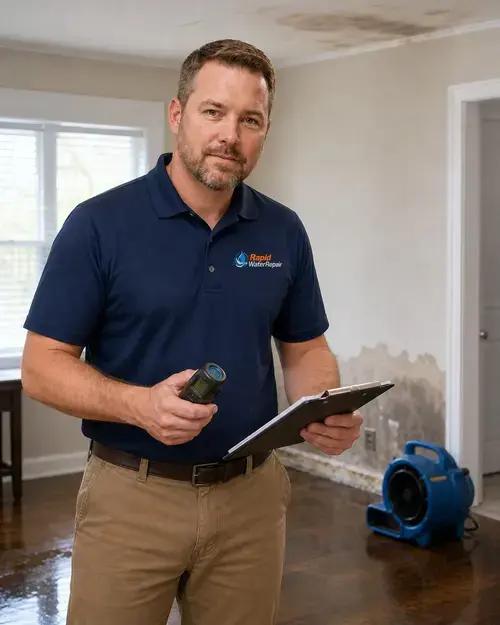
How I read a water damage job — from the source to a verified dry standard.
I'm Marcus Reed, an IICRC Water Damage Restoration Technician (WRT) working across Columbus, OH and Franklin County. On every call I start by finding and stopping the water source, then I work out the water category — clean, gray, or contaminated — because that decides what can be saved and what has to come out. From there I map how the moisture has traveled, since water rarely stays where you can see it.
I use a moisture meter and, where it helps, a thermal camera to find dampness wicking up drywall, behind baseboards, into subfloors, and inside wall cavities. I set air movers and dehumidifiers based on the affected area, take moisture readings each day, and I don't call drying complete until the materials reach a dry standard — not just until the surface feels dry. Along the way I photograph the conditions, log moisture readings, and write up the affected materials and scope so your insurance documentation is in order.
- Find and stop the source, then confirm the water category and any safety risks first
- Moisture-map hidden damp behind drywall, under flooring, and inside wall cavities
- Size drying equipment to the space and verify with daily moisture readings
- Photos, moisture logs, and an affected-materials list for your insurance claim
Tell us what happened — we'll help you understand the next step.
What I Check First on a Water Damage Call
Before any equipment comes off the truck, I work through the same seven checks. They tell me how far the water went, what's safe, what can be saved, and what your insurer will need to see.
1. The Water Source
First I find where the water is coming from and confirm it's stopped — a supply line, appliance, sump pump, roof, or sewer line. Drying never holds if the source is still active.
2. Safety Risks
I check for electrical hazards near water, slip and trip risks, ceiling sag from trapped water, and any contamination that means people should stay out of the area.
3. Water Category
Clean, gray, or contaminated (category 1, 2, or 3). The category decides the safety steps and which porous materials can be dried versus what has to be removed.
4. How the Moisture Traveled
Water wicks sideways and upward. I use a moisture meter — and a thermal camera where it helps — to map damp behind walls, under flooring, and into adjoining rooms.
5. Affected Materials
I assess flooring, drywall, baseboards, and cabinets — what's saturated, what's swelling, and what's still sound — so the plan protects what can be kept.
6. Equipment Needs
I size air movers and dehumidifiers to the affected area and material types, so the space dries to a verified standard instead of just feeling dry on the surface.
7. Insurance Documentation Needs
I note what to capture from the start — photos, moisture readings, and an affected-materials list — so your claim documentation is consistent and complete.
The Rapid Waterrepair Promise
Water damage is stressful enough without pressure or surprises. Here's what you can count on from us on every Columbus-area job.
Clear Next Steps First
You'll understand what we recommend, why it matters, and what it involves before any work starts — no work begins without your go-ahead.
Moisture-First Inspection
We start with moisture readings, not assumptions, so the plan is based on where the water actually went — including the damp you can't see.
Photos & Documentation When Needed
We capture photos, moisture readings, and an affected-materials list so you and your insurer work from the same clear record.
Safety-First on Sewage & Storm Water
Contaminated category 2 and 3 water is handled with the right precautions and containment — safety comes before speed.
No Scare Tactics
We explain the real risk in plain language and let you decide. We won't use fear or urgency to push you into a decision.
No Unnecessary Work
If a material can be dried and saved, we say so. We recommend removal and rebuild only when the readings and conditions call for it.
How the Water Damage Restoration Process Works
A clear, step-by-step path from your first call to a documented restoration plan and follow-up guidance.
Call or Send a Request
Reach out and tell us what happened so we can guide your immediate next steps right away.
Safety & Source Check
We confirm the water source is stopped, check for safety risks, and identify the water category.
Water Extraction
Standing water is removed quickly to stop the damage from spreading any further.
Moisture Mapping
We measure moisture behind walls, under floors, and into adjoining areas to find hidden damp.
Drying & Dehumidification
Air movers and dehumidifiers run until materials reach a verified dry standard, checked daily.
Cleanup & Documentation
Affected areas are cleaned and treated, and we document photos, readings, and the work involved.
Follow-Up Guidance
We confirm drying is complete and outline next steps for any repairs or rebuilding that's needed.
What Affects the Cost of Water Damage Restoration in Columbus, OH?
Every water damage situation is different, so a fair, accurate estimate requires an inspection. These are the main factors that influence the cost of restoration.
Damage & Scope Factors
- Amount of standing water — more water means more extraction and drying.
- Size of the affected area — larger areas take more equipment and time.
- Water category — clean, gray, or contaminated water changes the approach.
- Materials affected — drywall, carpet, hardwood, and structure differ.
Time & Restoration Factors
- Drying time required — deeper saturation needs longer drying.
- Mold or sewage involvement — adds remediation and safety steps.
- Structural repair needs — the extent of rebuild work after drying.
- Insurance documentation needs — the detail required for your claim.
Because hidden moisture and water category aren't always visible at first glance, an on-site inspection is the only reliable way to scope the work and the cost.
Need Water Damage Cleanup in Columbus, OH?
When water spreads through your home or business, fast cleanup matters. Rapid Waterrepair helps with water extraction and removal, damaged-area cleanup, structural drying and dehumidification, moisture checks, and restoration support for common water damage problems in Columbus, OH.
- Emergency water removal for standing water and wet areas
- Water extraction and drying for floors, walls, carpet, and affected rooms
- Flooded basement cleanup after heavy rain, sump pump failure, or drainage problems
- Burst pipe water damage repair and appliance leak water damage cleanup before damage spreads further
- Sewage backup cleanup and storm damage restoration support
- Moisture checks and drying notes to help guide the restoration process
If your water damage may involve insurance, we can help keep service details organized, but the main priority is stopping water damage, drying affected areas, and helping you move toward restoration.
Why Fast Water Damage Cleanup Matters
Water can move behind walls, under flooring, into baseboards, and through hidden areas quickly. Calling for cleanup early can help reduce soaked materials, musty odors, moisture problems, and additional repair needs.
- Helps remove standing water faster
- Supports safer drying of affected areas
- Reduces moisture trapped behind surfaces
- Helps protect floors, walls, and contents
- Gives the restoration process a clear starting point
Water Damage Restoration Across the Columbus, OH Area
Based around Columbus, we help homeowners, landlords, and businesses respond to water damage throughout the metro area and surrounding communities — from heavy-rain basement flooding on the east side to winter pipe bursts in the suburbs.
We also serve Columbus neighborhoods including Clintonville, German Village, Short North, Northland, Linden, Hilltop, South Side, Far East Columbus, Eastmoor & Berwick, and Westgate. Not sure if you're in our area? Call 614-304-9709 and ask.
Related Water Damage Service Pages
Dive deeper into the specific service you need.
Trusted by Columbus Homeowners
Real feedback from homeowners throughout Columbus and surrounding communities who called Rapid Waterrepair during a water emergency.
Our sump pump quit during that big storm and we woke up to two inches of water in the basement. Marcus walked me through shutting things off over the phone and got the extraction going fast. They dried everything out and checked the moisture readings every day until it was actually dry — not just dry on top. Saved our finished basement.
A pipe burst behind our kitchen wall while we were at work and soaked the cabinets and flooring. They extracted the water, pulled the wet drywall that couldn't be saved, and dried the rest in place. What really helped was the photos and moisture logs they put together — my insurance adjuster had everything they needed and the claim went through without a fight.
We had a sewage backup in the lower level and I had no idea where to even start. The crew showed up taking it seriously — full safety setup, removed the contaminated materials, sanitized, and dried the whole area. They were upfront about what had to go and what could stay. Professional and respectful through a pretty awful situation. Highly recommend.
- IICRC Certified Technicians
- Licensed & Insured
- 24/7 Emergency Response
- Insurance Claim Support
- Satisfaction Guarantee
Water Damage Restoration FAQs for Columbus, OH
Quick answers to the questions Columbus property owners ask most.
What should I do first after water damage?+
If it's safe, take these steps right away:
- Shut off the main water source to stop more water from coming in.
- Turn off the power at the breaker if water is near outlets, panels, or appliances.
- Move valuables, electronics, and important documents to a dry area.
- Document the damage with clear photos and video for your insurance records.
- Call a water damage restoration company for water extraction, drying, and cleanup guidance.
How fast should water be removed from a flooded basement?+
As soon as possible. Standing water keeps spreading into floors, drywall, and stored belongings, and the longer it sits, the higher the risk of structural damage and mold. Fast extraction and drying help limit how far the damage goes.
Do you provide emergency water damage restoration in Columbus, OH?+
Yes. Rapid Waterrepair helps Columbus-area homeowners, landlords, and businesses with emergency water removal, extraction, drying, and cleanup. Call 614-304-9709 to explain your situation and get help started.
Can water damage cause mold?+
Yes. Mold can begin to develop when moisture is left in materials like drywall, carpet padding, wood, and insulation. Thorough drying and moisture control after water damage help reduce that risk, and visible mold can be addressed through mold remediation.
Do you help with water damage from burst pipes?+
Yes. Burst and frozen pipes are a common cause of water damage in Columbus, especially in winter. We help with water extraction, drying affected walls and floors, and restoration planning after the pipe issue is stopped. Learn more about burst and frozen pipe repair.
Can you clean up sewage backups?+
Yes. Sewage backups involve contaminated water and require careful, safety-first cleanup. We help with removal, cleaning, sanitation, and drying of affected areas, along with documentation for your records. See sewage backup cleanup.
Do you restore water-damaged carpet or hardwood floors?+
We help with drying and restoration of water-affected carpet and hardwood flooring where it can be saved. After inspection and moisture readings, we explain what can likely be dried and restored and what may need replacement.
Can you help apartment and commercial properties?+
Yes. We serve homeowners, apartment property managers, landlords, retail spaces, offices, and commercial buildings across the Columbus area with water extraction, drying, and cleanup. See commercial water damage restoration.
Do you provide insurance claim documentation?+
We support your insurance claim with documentation such as photos, moisture readings, and itemized details of the affected areas and work involved. This helps you stay organized, though your insurer determines coverage and approval.
What areas around Columbus do you serve?+
We serve Columbus, OH and nearby communities including Dublin, Westerville, Gahanna, Hilliard, Grove City, Upper Arlington, Worthington, Reynoldsburg, Pickerington, New Albany, Powell, Delaware, and surrounding areas.
What happens after I call?+
We listen to what happened, help you with immediate next steps, and arrange a water damage inspection. From there we move through extraction, drying, cleanup, and restoration planning — keeping you informed at each stage.
Why does an inspection affect the cost?+
Water category, hidden moisture, and the materials affected aren't always visible at first glance. An on-site inspection is the reliable way to scope the work accurately, which is why we don't quote exact prices sight-unseen.
How long does water damage restoration take?+
It depends on how much water was involved, the materials affected, and how saturated they are. Water extraction is often done quickly, while structural drying typically continues over several days as moisture readings are monitored. Repairs and rebuilding, if needed, are scoped after drying is complete. We explain the expected timeline once we've inspected the affected areas.
What's the difference between water mitigation and water damage restoration?+
Mitigation is the urgent first phase — stopping the spread, removing standing water, and drying the area to prevent further damage. Restoration is the follow-up work that returns the property to its pre-damage condition, which can include cleaning, repairs, and rebuilding. We help guide you through both phases.
Is water damage covered by homeowners insurance?+
It varies by policy and cause. Sudden, accidental events such as a burst pipe are often covered, while gradual leaks or some flooding may not be. Your insurer makes the final determination, so we provide clear documentation — photos, moisture readings, and itemized details — to support your claim.
How much does water damage restoration cost in Columbus, OH?+
There's no single price, because cost depends on the amount of standing water, the size of the affected area, the water category, the materials involved, drying time, and whether mold or sewage is present. An on-site inspection is the only reliable way to scope the work and provide an accurate estimate.
Is water extraction enough, or do I still need drying?+
Extraction removes the standing water you can see, but it's only the first step. Water wicks into drywall, subfloors, framing, and insulation, and those materials stay wet after the surface looks dry. Structural drying with air movers and dehumidifiers, verified with moisture readings, is what actually brings materials back to a dry standard and helps reduce the risk of mold and warping.
Can wet drywall be dried, or does it need to be replaced?+
It depends on the water category and how saturated it is. Drywall wet from clean water and caught early can often be dried in place with the right airflow and dehumidification. Drywall that's been soaked a long time, has swollen or crumbling areas, or was exposed to sewage or contaminated water usually needs to be removed. Moisture readings guide that decision rather than guesswork.
What happens after a flooded basement?+
After a flooded basement, we extract the standing water, then check how far moisture has traveled into walls, baseboards, flooring, and stored belongings. We set up drying equipment and dehumidifiers, monitor moisture readings over the following days until materials reach a dry standard, clean affected areas, and document the conditions and work for your records and insurance.
Is sewage backup different from clean water damage?+
Yes. Sewage backup is category 3 (contaminated) water and is handled very differently from clean water. It's a health hazard, so it calls for safety precautions, careful removal, sanitation, and often removal of porous materials that can't be safely cleaned, followed by drying. Clean water from a supply line is lower risk and more materials can usually be dried and saved.
Do I need mold testing after water damage?+
Not always. If the area is dried quickly and thoroughly, mold testing is often unnecessary. Testing is more useful when water sat for a long time, when there's a musty odor, or when there's visible growth. The most important step is drying materials to a verified dry standard so mold has less chance to develop in the first place — and visible growth can be addressed with mold remediation.
How do I know if flooring can be saved?+
It depends on the flooring type, the water category, and how long it stayed wet. Carpet wet from clean water can often be dried if the padding is addressed quickly, while hardwood may be saved with specialized drying if cupping hasn't set in. Tile is usually fine, but moisture can hide in the subfloor beneath any surface. We take moisture readings and explain what can likely be dried versus replaced.
Talk to Rapid Waterrepair About Your Water Damage
Tell us what's happening and we'll help you take the right next steps. The sooner you reach out, the more options you have.
Business Hours
- Monday – Friday24 Hours
- SaturdayClosed
- Sunday24 Hours
- EmergenciesAnytime
Water Damage Won't Wait — Neither Should You
Whether it's a flooded basement, a burst pipe, storm flooding, or a sewage backup, Rapid Waterrepair is ready to help Columbus-area homes, apartments, and businesses with water removal, drying, and cleanup.